
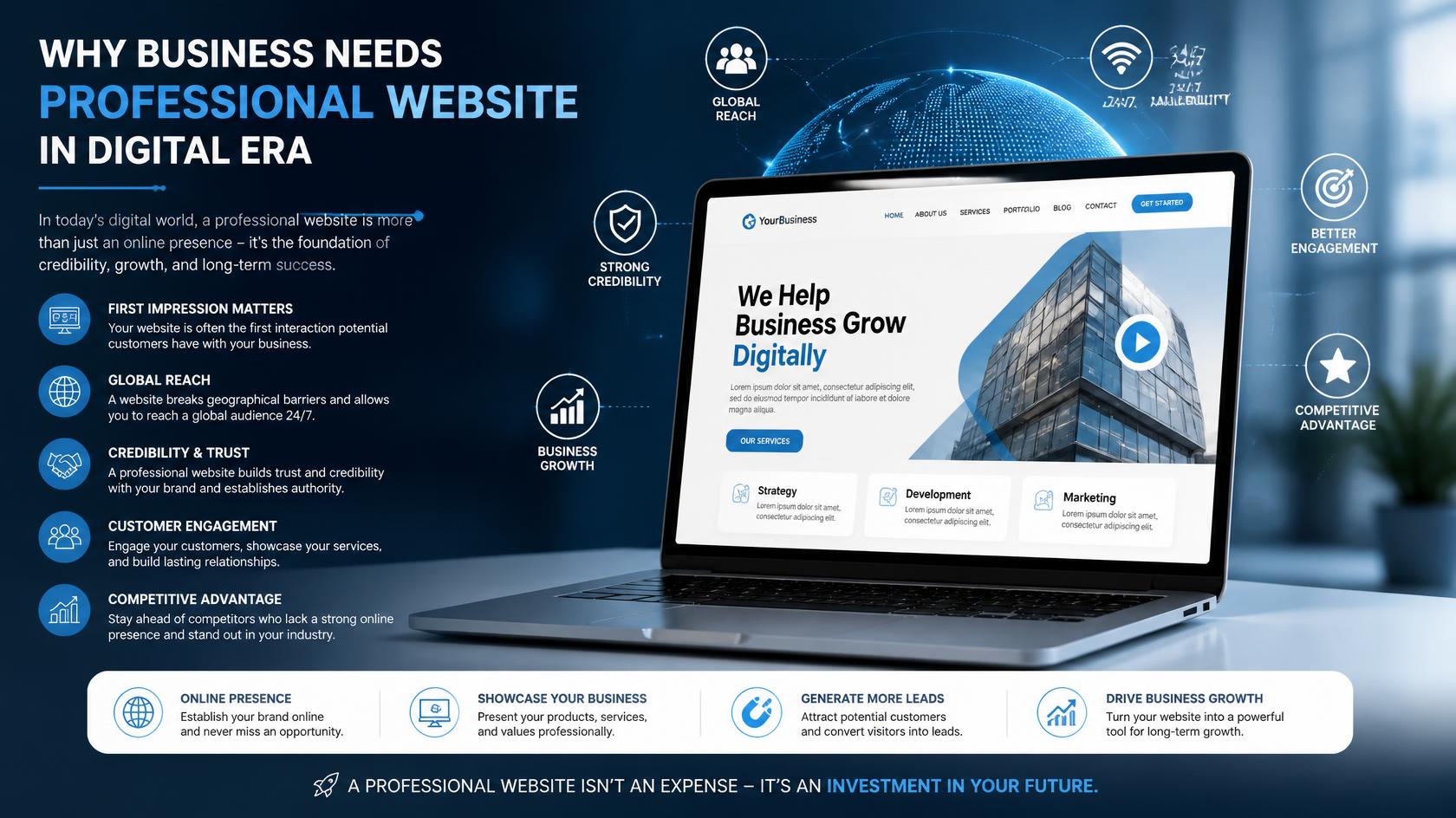
The way people discover and evaluate businesses has changed dramatically. Before contacting a company, many potential customers now search online, visit its website, read about its services, and decide whether the business appears trustworthy. For this reason, having a professional website is no longer optional for businesses that want to build credibility, reach new customers, and grow in the digital era.
A professional website gives your business a dedicated place to showcase its products or services, communicate its value, build credibility, and connect with potential customers. Unlike social media profiles or third-party platforms, a website gives you greater control over how your business is presented online.
Whether you run a small business, startup, professional service, or established company, a well-designed website can support your marketing efforts and create opportunities for long-term growth.
What Is a Professional Website?
A professional website is more than an attractive collection of web pages. It is a carefully designed digital platform that represents a business, communicates its brand, provides useful information, and guides visitors toward meaningful actions.
A professional website typically combines several important elements, including:
- A clean and modern design
- Clear and easy-to-use navigation
- Mobile-responsive layouts
- Fast loading performance
- High-quality and relevant content
- Search engine optimization (SEO)
- Clear calls to action
- Secure and reliable technology
- Consistent branding and visual identity
Ultimately, the goal is to create a positive experience for visitors while helping the business achieve measurable objectives, such as generating leads, receiving inquiries, increasing sales, or building brand awareness.
A website can also serve as a central hub for your digital marketing activities. Your social media profiles, online advertising campaigns, email marketing, and search engine optimization efforts can all direct potential customers to your website, where they can learn more about your business and take the next step.
For example, a professional website can combine your business information, services, portfolio, customer testimonials, and contact details in one accessible place.
Why Your Business Needs a Professional Website
1. Build Trust and Credibility
Trust is one of the most important factors in a customer’s purchasing decision. When potential customers search for your business online, your website may be one of the first places they visit to determine whether your company is legitimate and reliable.
For example, a professional website can strengthen that first impression by presenting clear information about your business, services, experience, portfolio, testimonials, contact details, and other relevant information.
On the other hand, an outdated, confusing, or poorly maintained website can make visitors question the credibility of a business, even when the business itself provides excellent products or services.
2. Make a Strong First Impression
Your website often becomes part of the first interaction between your business and a potential customer.
A modern website with clear messaging, consistent branding, professional visuals, and intuitive navigation can immediately communicate that your business takes its customers seriously.
However, this does not mean your website needs to be complicated or filled with unnecessary features. Effective website design focuses on making important information easy to find while creating an experience that feels professional and trustworthy.
3. Reach More Potential Customers
A physical location limits a business to a specific geographic area. As a result, a website can help expand that reach.
With a properly optimized business website, potential customers can discover your company through search engines regardless of whether they are looking for your services during business hours or outside them.
Your website can provide information 24/7, allowing visitors to learn about your products, services, pricing, portfolio, or contact options whenever they need them.
For small businesses in particular, this can create opportunities to compete online with larger companies and reach audiences that may never discover the business through traditional marketing alone.
4. Establish Your Online Presence
In the digital era, customers expect businesses to have an online presence where they can find reliable information. A professional website gives your business a permanent digital home that customers can access from anywhere.
Unlike social media platforms, your website gives you greater control over your content, branding, structure, and customer experience. You decide how your business is presented and what information visitors see.
Furthermore, your website can also bring together important aspects of your online presence, including your business information, services, portfolio, customer testimonials, contact details, and links to your social media channels.
For businesses that want to build a recognizable brand, having a consistent and professional online presence can make it easier for customers to remember and trust the company.
5. Generate Leads and Sales
A website should not only provide information. It should also help your business generate opportunities.
A well-designed website can guide visitors toward specific actions, such as:
- Requesting a quote
- Contacting your business
- Booking a consultation
- Purchasing a product
- Signing up for a newsletter
- Downloading useful resources
As a result, clear calls to action can help visitors understand what they should do next instead of leaving the website without taking any action.
For example, a service-based business might use a “Request a Quote” button, while an e-commerce business may focus on product pages and “Buy Now” calls to action.
When website content, design, and calls to action work together, your website can become an important part of your sales process.
6. Support Your Digital Marketing Strategy
Digital marketing works better when your business has a strong destination for potential customers.
Search engine optimization, social media marketing, email campaigns, online advertising, and content marketing can all direct people to your website.
For example, an SEO campaign can help your website appear in search results when people search for services related to your business. A social media post can direct followers to a detailed service page. An online advertisement can send potential customers to a dedicated landing page.
This makes a professional website an important foundation for many digital marketing activities.
In addition, your website can provide valuable data about how visitors interact with your business. Analytics tools can help you understand which pages receive the most visits, where visitors come from, and which actions they take.
These insights can help you make better marketing and business decisions over time.
7. Stay Competitive in the Digital Market
Your competitors are likely already using digital channels to attract customers. If your business does not have a strong online presence, potential customers may choose another company simply because it is easier to find and evaluate.
A professional website can help you present your business alongside competitors and communicate what makes your products or services different.
Your website can highlight your experience, expertise, unique value proposition, customer results, portfolio, certifications, or other factors that differentiate your business.
However, having a website is only the starting point. Therefore, to remain competitive, businesses should continuously improve their website content, performance, user experience, and search visibility.
A website that evolves with your business can continue supporting your growth as customer expectations and digital trends change.
What Makes a Professional Website Effective?
Having a website is not enough. The quality of the website can influence how visitors perceive your business and whether they decide to contact you, make a purchase, or explore your services further.
An effective professional website combines design, performance, usability, content, and technical elements to create a reliable experience for visitors.
1. Responsive and Mobile-Friendly Design
A large number of people access websites using smartphones and tablets. Your website should therefore work properly across different screen sizes and devices.
Responsive web design automatically adapts the layout, images, text, buttons, and other elements to the visitor’s screen.
In addition, a mobile-friendly website makes it easier for users to read content, navigate between pages, complete forms, and interact with your business regardless of the device they use.
2. Fast Loading Speed
Website performance can have a significant impact on user experience. Visitors are less likely to stay on a website if pages take too long to load.
A professional website should be optimized for speed by using properly sized images, efficient code, reliable hosting, caching, and other performance techniques.
As a result, faster loading pages can create a smoother browsing experience and help visitors find the information they need without unnecessary delays.
3. Clear and Simple Navigation
Visitors should be able to find important information without having to search through complicated menus.
A clear navigation structure can help users quickly access pages such as:
- Home
- About
- Services
- Products
- Portfolio
- Blog
- Contact
In addition, good navigation helps search engines understand the structure and relationship between different pages on your website.
The goal is simple: visitors should know where they are, what information is available, and where they can go next.
4. SEO-Friendly Structure
Search engine optimization helps potential customers discover your website when they search for relevant products, services, or information.
An SEO-friendly website should have a logical structure, descriptive page titles, useful content, appropriate headings, optimized images, clean URLs, internal links, and other technical SEO elements.
For example, a website development company may create dedicated pages targeting services such as professional web design, business website development, and website redesign.
Therefore, SEO should be considered during the website design and development process rather than added as an afterthought.
5. High-Quality and Relevant Content
Although design can attract visitors, useful content helps keep them engaged.
Your website should clearly explain what your business offers, who you serve, and why customers should choose you.
Effective website content should be:
- Clear and easy to understand
- Relevant to your target audience
- Accurate and trustworthy
- Structured with appropriate headings
- Focused on customer needs
- Updated when information changes
Instead of filling pages with promotional statements, focus on answering the questions your potential customers are likely to ask.
6. Clear Calls to Action
A professional website should make it easy for visitors to take the next step.
Calls to action, often called CTAs, tell visitors what action they can take. Examples include:
- Contact Us
- Get a Free Quote
- Book a Consultation
- View Our Services
- Start Your Project
- Learn More
In addition, the right CTA depends on the purpose of your website and the stage of the customer’s decision-making process.
Strategically placed CTAs can help turn website visitors into leads or customers.
7. Consistent Branding
Your website should reflect the identity of your business.
Consistent use of colors, typography, imagery, logos, messaging, and visual elements can create a recognizable brand experience.
As a result, when your website matches your other marketing channels, such as social media, email campaigns, and printed materials, customers can more easily recognize and remember your business.
8. Secure and Reliable Technology
Security is another important component of a professional website.
Using HTTPS, keeping website software updated, maintaining secure hosting, and regularly backing up important data can help protect your website and its visitors.
Security is especially important for websites that collect personal information, process payments, provide customer accounts, or use online forms.
A reliable technical foundation also helps ensure that visitors can access your website consistently.
9. Easy-to-Use Contact Options
Potential customers should not have to struggle to contact your business.
Your website can provide multiple contact options depending on your business model, such as contact forms, email addresses, phone numbers, messaging applications, booking systems, or physical location information.
Making these options easy to find reduces friction and gives visitors a clear way to start a conversation with your business.
Ultimately, an effective website is built around the needs of its users. Every design and technical decision should contribute to a website that is easy to understand, easy to use, and capable of supporting the business’s goals.
Professional Website vs. DIY Website
When starting a business, many owners consider building their own website using a website builder or template. DIY website platforms can be useful for simple projects and businesses with limited budgets.
However, there can be important differences between a DIY website and a professionally designed website.
DIY Website
A DIY website can be a practical option when you need a basic online presence quickly. Website builders provide templates and tools that allow users to create pages without extensive technical knowledge.
For example, for some businesses, this approach may be enough during the early stages.
However, DIY websites can have limitations when a business needs a more customized design, stronger SEO, better performance, advanced functionality, or a more consistent brand experience.
Business owners also need to spend time learning the platform, creating content, managing updates, optimizing pages, and troubleshooting technical issues.
Professional Website
A professionally designed website is created with the business’s goals, target audience, branding, and customer journey in mind.
Instead of simply selecting a template, professional web design focuses on creating a website structure and experience that supports specific business objectives.
For instance, professional website services can include:
- Custom website design
- Responsive web development
- SEO-friendly website structure
- Performance optimization
- Content organization
- Conversion-focused layouts
- Website security
- Ongoing maintenance and improvements
A professional approach can also save business owners time. Instead of handling every technical and design decision themselves, they can focus on running their business while specialists manage the website project.
Which Option Is Right for Your Business?
There is no single solution that works for every business.
A DIY website may be suitable if you need a simple website, have a very limited budget, and are comfortable managing the website yourself.
A professional website may be a better investment if your website plays an important role in generating leads, selling products, building credibility, or supporting your digital marketing strategy.
The important question is not simply how much it costs to build a website. You should also consider what the website needs to achieve for your business.
If your website is expected to become an important source of customers and revenue, investing in professional website design can provide greater opportunities for long-term growth.
How a Professional Website Supports Business Growth
A website can become more than an online brochure. When it is designed around clear business objectives, it can support different stages of the customer journey and contribute to long-term business growth.
Build a Stronger Brand with a Professional Website
Your website provides a central place where customers can learn about your brand and what makes your business different.
A consistent visual identity, clear messaging, professional content, and a well-organized website can help create a stronger and more memorable brand experience.
Over time, this consistency can make it easier for customers to recognize your business across different digital channels.
Generate Leads with a Professional Website
A professional website can work continuously to attract and engage potential customers.
Visitors can discover your business through search engines, social media, referrals, online advertising, or other marketing channels. Once they arrive on your website, clear service information and calls to action can encourage them to contact your business.
For service-based companies, this could mean generating quote requests, consultation bookings, or inquiries. For online stores, it could mean encouraging product purchases.
Improve Customer Experience with Professional Web Design
Customers expect businesses to provide information quickly and conveniently.
A well-structured website makes it easier for visitors to find answers, understand your services, compare options, and contact your business.
Features such as clear navigation, readable content, responsive design, fast loading pages, and simple contact forms can reduce friction throughout the customer journey.
A better online experience can contribute to stronger customer satisfaction and make it easier for potential customers to move from research to action.
Strengthen Your SEO and Online Visibility
A professional website can provide a strong foundation for search engine optimization.
By creating useful content, optimizing important pages, targeting relevant search terms, improving technical performance, and building a logical internal linking structure, businesses can increase their chances of being discovered through search engines.
SEO is a long-term strategy. Results may take time, but consistently improving your website can create a sustainable source of organic traffic.
For businesses targeting specific locations, industries, or customer segments, dedicated website pages and helpful content can also make it easier to reach relevant audiences.
Support Other Marketing Channels
Your website can serve as the central destination for many of your marketing campaigns.
Social media posts can direct followers to your website. Email campaigns can send subscribers to specific pages. Search advertising can direct users to landing pages designed around particular services or offers.
This creates a connected digital marketing ecosystem instead of treating each marketing channel as a separate activity.
Provide Valuable Business Insights
A website can also help you understand your audience.
Analytics and other measurement tools can provide information about where visitors come from, which pages they visit, how long they stay, and which actions they take.
As a result, these insights can help businesses identify opportunities to improve their content, marketing campaigns, website structure, and customer journey.
Instead of making decisions based only on assumptions, businesses can use website data to make more informed improvements.
Adapt as Your Business Grows
A website should be able to evolve alongside your business.
As your company introduces new services, enters new markets, adds products, or changes its strategy, your website can be updated to reflect those developments.
Therefore, this flexibility makes a professional website a long-term business asset rather than a one-time marketing expense.
The most effective websites are not simply built and forgotten. They are continuously improved based on customer needs, business goals, performance data, and changes in the digital landscape.
How to Choose a Professional Website Design Service
Choosing the right website design service is an important decision because your website can become a long-term digital asset for your business.
Instead of choosing a provider based only on price, consider whether the service can understand your business goals and create a website that provides real value to your customers.
1. Review Their Portfolio
A portfolio can give you an idea of a website provider’s design style, technical capabilities, and experience with different types of projects.
Look for examples that demonstrate:
- Clear and professional layouts
- Mobile-responsive designs
- Consistent branding
- Easy navigation
- Effective calls to action
- Different types of business websites
More importantly, a strong portfolio should demonstrate more than visual design. It should show how the provider approaches real business problems.
2. Consider Their Understanding of SEO
Website design and SEO should work together.
Ask whether the website will be built with an SEO-friendly structure, including optimized page titles, headings, URLs, images, internal links, mobile responsiveness, and performance.
A visually attractive website that cannot be easily discovered through search engines may have limited value for businesses that depend on organic traffic.
3. Look Beyond Visual Design
Professional web design is not only about colors, fonts, images, and animations.
A quality website should also consider:
- User experience
- Website performance
- Accessibility
- Security
- Content structure
- SEO
- Conversion goals
- Mobile usability
The best website design balances aesthetics with functionality and business objectives.
4. Understand What Is Included
Before starting a website project, make sure you understand what the website development services include.
Depending on the provider, a package may include design, development, content integration, SEO setup, responsive optimization, contact forms, analytics integration, maintenance, or technical support.
Knowing what is included can help prevent unexpected costs or misunderstandings later.
5. Check Communication and Support
Website projects involve collaboration between the business owner and the website provider.
Good communication makes it easier to discuss requirements, provide feedback, review progress, and make decisions throughout the project.
You should also understand what happens after the website is launched.
Ask whether the provider offers maintenance, updates, troubleshooting, or other forms of ongoing support.
6. Focus on Business Results
The right website provider should understand that a website is a business tool, not simply a digital decoration.
Before starting the project, identify what you want the website to achieve.
For example, your primary goal may be to:
- Generate more inquiries
- Increase online sales
- Build brand credibility
- Promote professional services
- Attract local customers
- Showcase your portfolio
- Support your digital marketing campaigns
Clear goals make it easier to determine whether the website is delivering value.
7. Consider Long-Term Scalability
Your business may change after the website is launched.
You may add new services, publish more content, expand your target market, introduce e-commerce functionality, or integrate additional tools.
A professional website should have a structure that can accommodate reasonable future growth.
Choosing a website provider that thinks beyond the initial launch can help you avoid rebuilding the entire website every time your business evolves.
Build a Professional Website for Your Business
Your website is often one of the first places potential customers visit when they want to learn more about your business. A professional online presence can help you build credibility, communicate your value, and create opportunities to connect with new customers.
At Rafora Digital, we help businesses create modern and professional websites designed around their goals and target audiences.
Our approach combines clean design, responsive layouts, user-friendly navigation, SEO-friendly structure, and clear calls to action to create websites that are not only visually appealing but also useful for business growth.
Whether you need a company website, business website, landing page, or a website redesign, the right solution should reflect your brand and make it easier for customers to understand what you offer.
If you are ready to establish or improve your online presence, explore our professional website design services and discover how a well-planned website can support your business in the digital era.
Frequently Asked Questions
Do small businesses need a professional website?
Yes. A professional website can help small businesses establish credibility, reach potential customers online, explain their products or services, and compete more effectively in the digital market.
The website does not need to be complicated. What matters most is that it clearly communicates the business’s value and provides a useful experience for visitors.
How much does a professional website cost?
The cost of a professional website depends on factors such as the number of pages, design requirements, functionality, content, integrations, SEO requirements, and ongoing maintenance.
A simple business website may require a smaller investment than a custom website with advanced functionality or e-commerce features.
Rather than focusing only on the initial price, consider the value the website can provide to your business over time.
How long does it take to build a professional website?
The timeline depends on the complexity of the project and how quickly content, feedback, and other requirements are provided.
A simple website may be completed relatively quickly, while a larger custom website may require more time for planning, design, development, testing, and optimization.
Can a professional website help with SEO?
Yes. A website can provide a strong foundation for SEO when it has a logical structure, useful content, optimized pages, mobile-friendly design, good performance, and other technical SEO elements.
However, building a website alone does not guarantee search engine rankings. SEO is an ongoing process that requires continuous content and technical improvements.
Should I build my own website or hire a professional?
It depends on your business goals, budget, technical skills, and the role the website will play in your business.
A DIY website can be suitable for a simple online presence. However, if your website is expected to generate leads, strengthen your brand, support SEO, or become an important part of your marketing strategy, working with a professional can provide additional expertise and save you time.
Conclusion
In the digital era, a website is no longer simply an optional marketing tool. For many businesses, it has become an important part of how customers discover, evaluate, and interact with a company.
A professional website can help build trust, strengthen your online presence, reach new audiences, generate leads, support digital marketing, and create a better customer experience.
However, the value of a website depends on more than its appearance. Successful websites combine thoughtful design, useful content, strong performance, SEO, usability, security, and clear business objectives.
Whether you are launching a new business or improving an existing online presence, investing in a well-planned website can create a strong foundation for future growth.
The digital landscape will continue to change, but the need for businesses to provide a credible, accessible, and useful online experience will remain.
Ready to build a professional website for your business? Explore Rafora Digital’s website design services and take the next step toward a stronger online presence.